
Asbestos regulations
New asbestos regulations: protect your staff adequately.
Since 19 December 2025, Belgian regulations on asbestos removal have been tightened. New exposure limits apply and, from 21 December 2027, you will be required to use a new measurement method. The new rules make it necessary to use safer and more reliable respiratory protection. Dexis Belgium explains the main challenges and solutions.
Anyone working with asbestos must comply with stricter limits since the end of 2025. In concrete terms, this means that the limit for asbestos is now 0.01 fibres/cm³. In December 2029, this limit will be tightened further to 0.002 fibres/cm³: a good thing for public health.
In order to reliably monitor the new, low limit value, exposure measurements must be carried out using electron microscopy (EM) from 21 December 2027 onwards. This technique detects much smaller fibres and easily distinguishes between asbestos and non-asbestos.
What does this mean for respiratory protection?
The new regulations require that PPE be selected on the basis of a risk analysis and that it effectively reduce exposure below the limit value. This is only possible if the correct type of mask is selected, the mask fits the face correctly and a fit check is carried out before each use, as well as periodic quantitative fit testing.
Such fit testing shows that there are no leaks, that the required protection factor is effectively achieved and that the employee is truly protected against the low limit values. This makes fit testing not a formality, but an essential safety requirement.
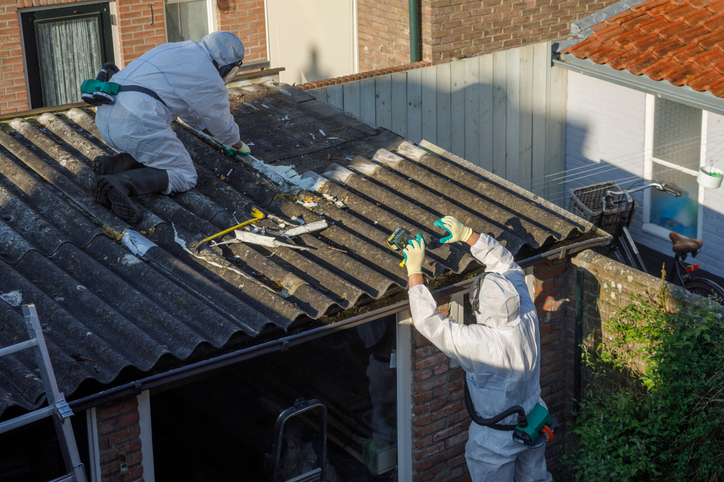
What respiratory protection do you need?
The type of respiratory protection you need depends on the type of activity. This table summarises the most important ones for you.
| Activity | Required respiratory protection |
| Inventory & sampling | Full-face mask P3 (for containment) Half-face mask P3 (for sampling) |
| Simple tasks (EH) | Motor-driven full-face mask P3 (PAPR) |
| Incubator bag method | Full-face mask with forced air / PAPR / compressed air |
| Hermetically sealed zone | Compressed air / air supply system / PAPR (high PF required) |
| Repair/maintenance with risk of exposure | Full-face mask P3 up to and including compressed air independent respiratory protection (RA: Respirator Airline System). |
Please note: the choice of PPE type must be based on a risk analysis. This analysis must take into account:
- the type of material;
- the condition of the material (bonded or non-bonded);
- the working method;
- the duration of exposure;
- ventilation and environmental factors;
- the new limit values;
- and the results of previous exposure measurements.
Based on this risk assessment, a decision is then made as to which working method is permitted, which PPE is mandatory and whether any additional measures are required. The risk assessment therefore forms the legal and technical basis for every choice of PPE and working method.
The importance of maintenance
The correct functioning of respiratory protective equipment can only be guaranteed if the equipment is regularly maintained and checked. The Codex on Well-being at Work stipulates that PPE must always be in good condition and remain functional. That is why periodic maintenance of respiratory protection is absolutely necessary.
We recommend that maintenance be carried out at least once a year. This includes checking valves, seals, filters, connections and mechanical parts for wear or defects. This ensures that the protection factor is maintained and that the user remains safe at work.
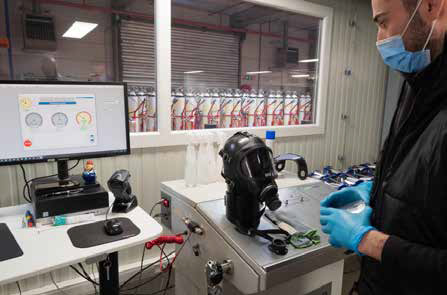
Discover the respiratory protection equipment from Dexis Belgium
Not sure which products are recommended in your case? Or would you like to request a quote? Feel free to contact our Product Sales Specialists Safety & Hygiene for more information about our solutions for respiratory protection equipment, services, maintenance and quantitative fit testing: [email protected]. Or scroll through our online webshop to easily place your order.
Get started right away: select the category below that speeds up your search


